Australia’s first offshore wind support auction: Nine Gippsland projects, 2 GW on offer
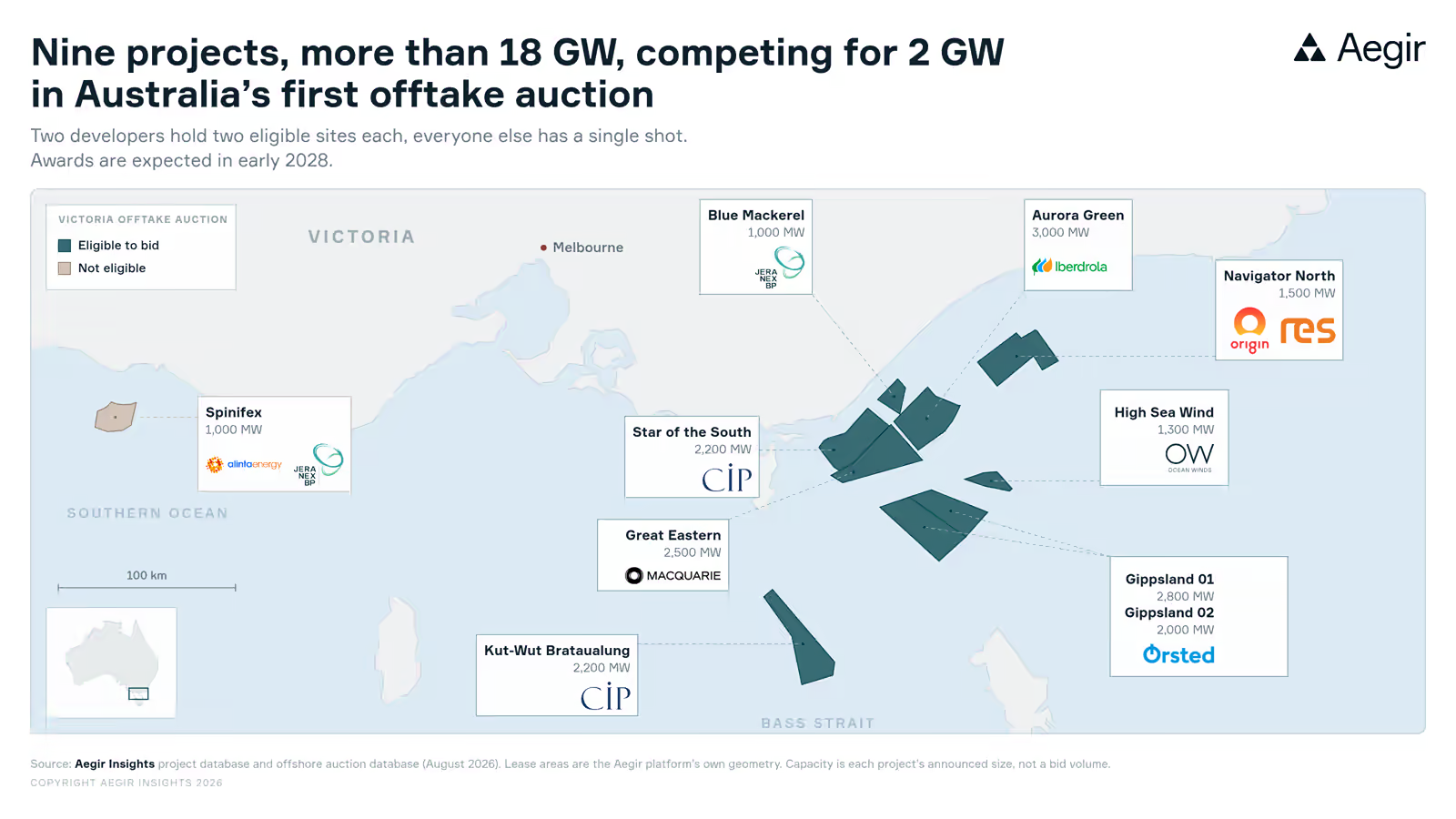
On 25 August, Victoria launched Australia’s first offshore wind support auction. There is 2 GW on offer, a one-year bidding window, and awards are targeted for early 2028. Only Gippsland license holders can bid, which makes nine projects eligible, more than 18 GW of announced capacity between them. On paper that is more than nine times the volume on offer. But the question is not who is eligible, it is who is positioned to bid, and at what price.
Which projects are eligible to bid?
Eligibility is restricted to Gippsland license holders. That admits nine projects and excludes everything elsewhere in Australian waters, including Victoria’s own non-Gippsland site.
| Project | Capacity | License holder |
|---|---|---|
| Aurora Green | 3,000 MW | Iberdrola |
| Gippsland 01 | 2,800 MW | Ørsted |
| Great Eastern | 2,500 MW | Macquarie |
| Star of the South | 2,200 MW | Copenhagen Infrastructure Partners |
| Kut-Wut Brataualung | 2,200 MW | Copenhagen Infrastructure Partners |
| Gippsland 02 | 2,000 MW | Ørsted |
| Navigator North | 1,500 MW | Origin and RES |
| High Sea Wind | 1,300 MW | Ocean Winds |
| Blue Mackerel | 1,000 MW | Jera Nex bp |
Announced capacity, not bid volume. Source: Aegir Insights project database and offshore auction database, August 2026.
The one Victorian project shut out is Spinifex, 1,000 MW off the state’s western coast, held by Alinta Energy and Jera Nex bp. It sits outside the Gippsland declared area, so it cannot bid into this round.
Two of the nine license holders hold two eligible sites each: Copenhagen Infrastructure Partners, with Star of the South and Kut-Wut Brataualung, and Ørsted, with Gippsland 01 and Gippsland 02. Everyone else has a single shot. Jera Nex bp is the near miss: It holds two Victorian sites, but only Blue Mackerel is inside Gippsland.
Is the auction really nine times oversubscribed?
On paper, yes. More than 18 GW of eligible capacity against 2 GW on offer is a ratio of better than nine to one.
In practice, that ratio measures eligibility, not competition. Holding a Gippsland license makes a project admissible; whether a developer is in a position to price a bid it would then have to deliver on is a separate question. Our own read is that some of the nine look unlikely to turn up at all.
The distinction matters because the two are easy to conflate and they point to opposite conclusions. Nine eligible projects reads as a buyer’s market and a low clearing price, but a handful of genuinely bid-ready projects reads as the opposite.
There is a second reason the headline ratio misleads: Two holders bring two sites each, and a developer with two eligible projects is not bidding twice as hard. Rather, they are bidding a portfolio, potentially putting their stronger site forward, holding the other back for a later round, or splitting volume across both. That is a different bidding problem compared to a single-site developer with just one chance in this round.
Indicative break-even strike prices in Aegir Quant™
In Aegir Insights’ new analysis, we modeled all nine eligible projects in Aegir Quant™ on a consistent set of support assumptions, analyzing:
Indicative break-even strike prices for each of the nine, so the projects can be compared against each other.
Potential bid strategies and aggressiveness across all eligible projects and developers, including how the two-site holders can play their portfolio.
A view on who looks unlikely to turn up at all, before the window even closes.
Where to read the full analysis
Aegir Platform users can read the full analysis and the underlying data, including the indicative break-even strike price for each of the nine eligible projects and the bid-strategy read on every developer.
The nine projects, their lease areas and their license holders sit in the Aegir renewables project database, alongside the rest of offshore wind globally. For the Australian sites outside Gippsland, including the ones this round shuts out, see our earlier look at Australia’s offshore wind projects beyond Gippsland. This round is also one of eight offshore auctions in our global wind auction calendar for the second half of 2026.
Interested in a walk-through of the analysis, including the Aegir Quant™ runs behind the indicative strike prices? Reach out to us here.
Key questions on Australia’s first offshore wind support auction
When did Australia’s first offshore wind support auction open?
25 August 2026, launched by the state of Victoria. The bidding window runs for one year. It is Australia’s first auction for offtake support; feasibility licenses for the Gippsland sites were awarded earlier.
How much capacity is on offer?
2 GW, with awards targeted for early 2028.
Which projects can bid?
Only Gippsland license holders, which makes nine projects eligible: Aurora Green, Gippsland 01, Gippsland 02, Great Eastern, Star of the South, Kut-Wut Brataualung, Navigator North, High Sea Wind and Blue Mackerel.
How much eligible capacity is competing?
More than 18 GW of announced capacity, over nine times the volume on offer.
Why is Spinifex not eligible?
It sits off western Victoria, outside the Gippsland declared area that defines eligibility for this round.
Have the support terms been confirmed?
Not yet. The formal tender documentation has not been published.