Battery storage duration by market
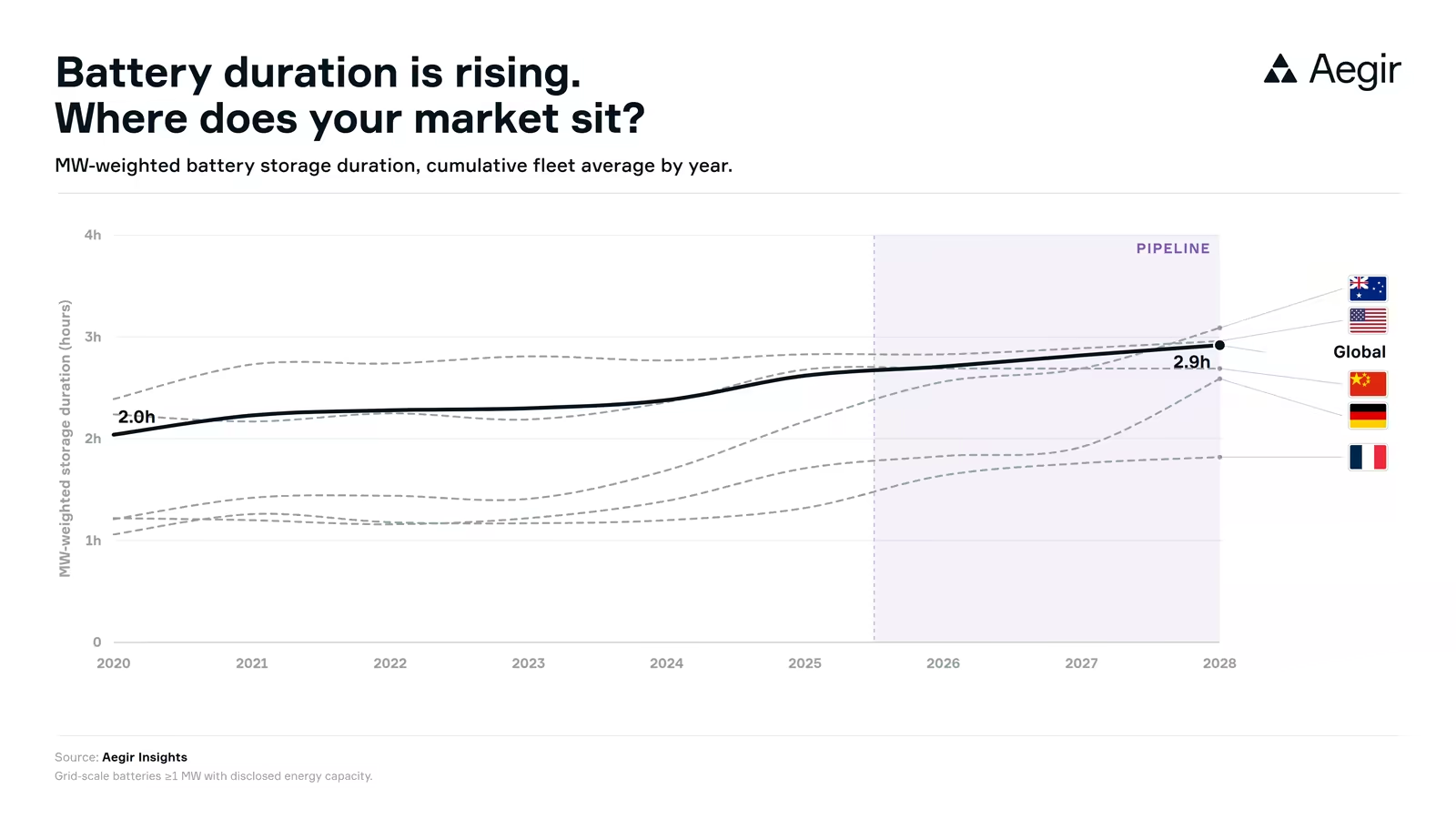
Grid batteries used to be built for speed. Increasingly, they are being built for duration.
The early grid-scale fleet leaned short, sized for frequency response and fast grid services. The new wave runs longer, built to operate in more energy-intensive markets.
From the Aegir Insights storage database, we took every electrochemical grid-scale battery of 1 MW or more with disclosed energy capacity. We weighted duration by power, then tracked the cumulative fleet average by commissioning year and expected COD.
The global fleet has climbed from about 2.0 hours in 2020 to nearly 2.9 hours including the 2028 pipeline.
Each market has its own story
- China: 2.2 to 2.7 hours. A modest rise that tracks the global average it helps anchor.
- Australia: 1.2 to 3.1 hours. The steepest shift, now above the global average.
- Germany: 1.2 to 2.6 hours. A late but sharp turn, closing on the global average.
- United States: 2.4 to 3.0 hours. Energy-heavy from the start, still above the global average.
- France: 1.1 to 1.8 hours. Rising slowly, still short of the global average.
Years from mid-2025 onward are pipeline (expected COD). Undated pipeline projects are excluded, so the 2028 figures could climb higher still.
Benchmark any market
Do you want to explore the differences across markets? Aegir Insights tracks 10,000+ grid-scale storage projects across 120+ markets, and lets you benchmark any market on duration, scale, and pipeline.
Reach out for a walk-through: get in touch.