Where should a Chinese turbine OEM place its bets in Europe?
Chinese turbine OEMs have targeted the European offshore wind market for several years. Aegir's earlier analysis showed European turbine manufacturing capacity falling behind a rising project pipeline, leaving a gap that non-European suppliers are positioned to fill (available to clients on the Aegir Platform).
The policy backdrop is moving the other way. EU legislation is tightening on non-European supply, and the UK recently rejected Ming Yang's proposal to build a large-scale factory in Scotland, citing national security concerns. The obstacles are real, and they are multiplying.
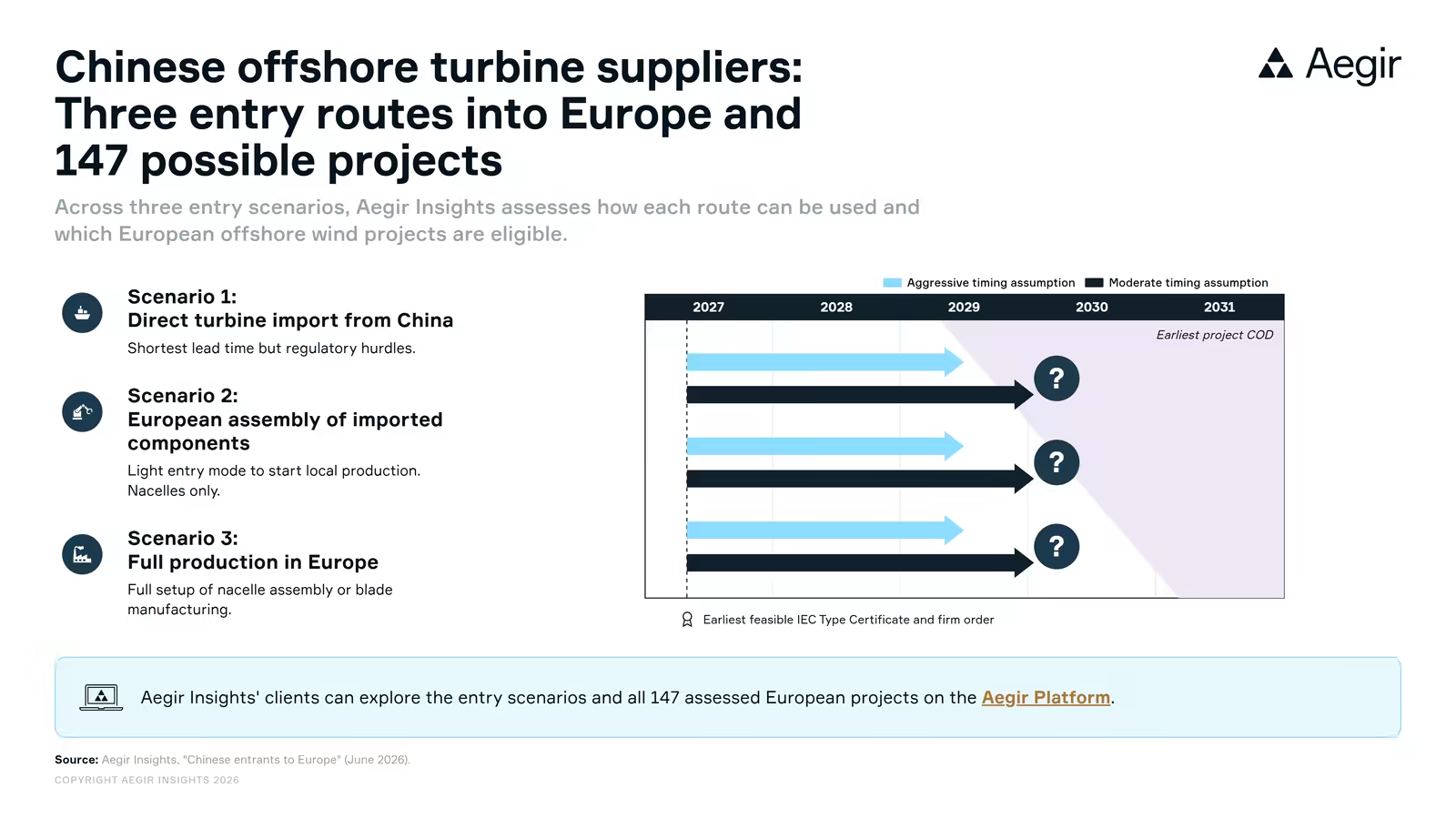
The OEMs are pushing forward regardless. In our June 2026 report, "Chinese entrants to Europe," we identified three entry scenarios, each with a different timeline and a different level of regulatory exposure.
Three routes into Europe
Direct turbine import from China. Components delivered from plants outside Europe. The shortest lead time, but the steepest regulatory hurdles.
European assembly of imported components. A light entry model, with imported nacelle components assembled locally. A first foothold in European production.
Full-scale production in Europe. A full setup in Europe: a nacelle assembly plant, or blade manufacturing.
Each route trades speed against exposure. Direct import moves fastest but sits most directly in the path of tightening rules; local assembly and full production lower the regulatory friction but push the timeline out.
147 projects, 181 GW, 16 markets
We ran these three scenarios across the European project pipeline to find where both impact and willingness are most likely. The result: 147 eligible projects across the EU and Norway, totaling 181 GW across 16 markets.
The analysis produces a targeted project list by entry route, focused on where cheaper Chinese turbines could make a project more economically viable. Cost is only half the picture, though. European developers' appetite to use Chinese turbines varies sharply, shaped by track record, political exposure, and financing model. A project that pencils out on turbine price may still be off the table for a developer answering to a lender or a national government.
That split between what is economically eligible and what is commercially realistic is where the entry question is actually decided.
Explore the full analysis
Aegir Insights' clients can explore all 147 assessed projects, the scenario assumptions behind each entry route, and the developer profiling on the Aegir Platform.
Want a walk-through? Get in touch.