Size the battery and bet on volatility: What co-located storage does to offshore wind returns
Size the battery and bet on volatility
Co-locating a battery energy storage system (BESS) with an offshore wind farm earns its keep on the inverse relationship between wind speeds and power prices.
A concrete example is Ørsted's 300 MW / 600 MWh Iceni battery, co-located with Hornsea 3's onshore converter station.
How much can co-located storage improve an offshore wind project's business case?
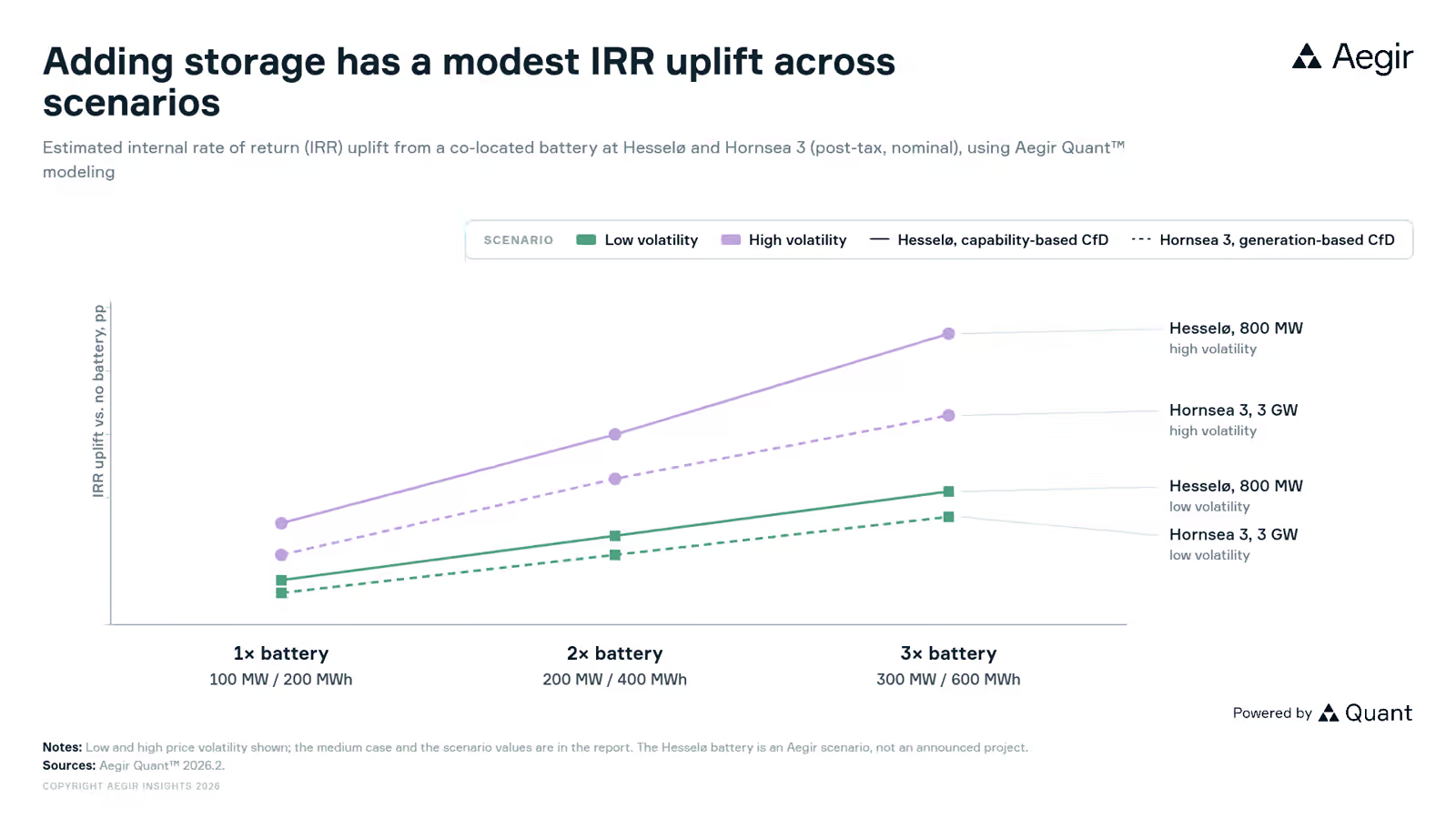
Using Aegir Insights' techno-economic modeling solution Aegir Quant™, we modeled 18 scenarios, varying battery size and day-ahead price volatility to estimate the potential uplift in internal rate of return (IRR). We looked at both Hornsea 3 in the UK and a hypothetical co-located battery at Hesselø in Denmark. Our analysis shows that across the scenarios modeled, the IRR uplift stays modest.
The selected scenarios show that larger battery sizes and higher price volatility reinforce each other, producing a combined uplift greater than the sum of their individual parts.
The ratio of battery capacity relative to wind farm capacity helps explain the difference in IRR uplift between the two projects.
Aegir clients can dive deeper into the numbers with our new report, which includes further scenario analysis, and examines how the flexibility offered by generation-based CfDs and capability CfDs can support different project configurations.
Reach out to get a walk-through: www.aegirinsights.com/contact