Could the UK's floating future be determined by grid charges, not site conditions?
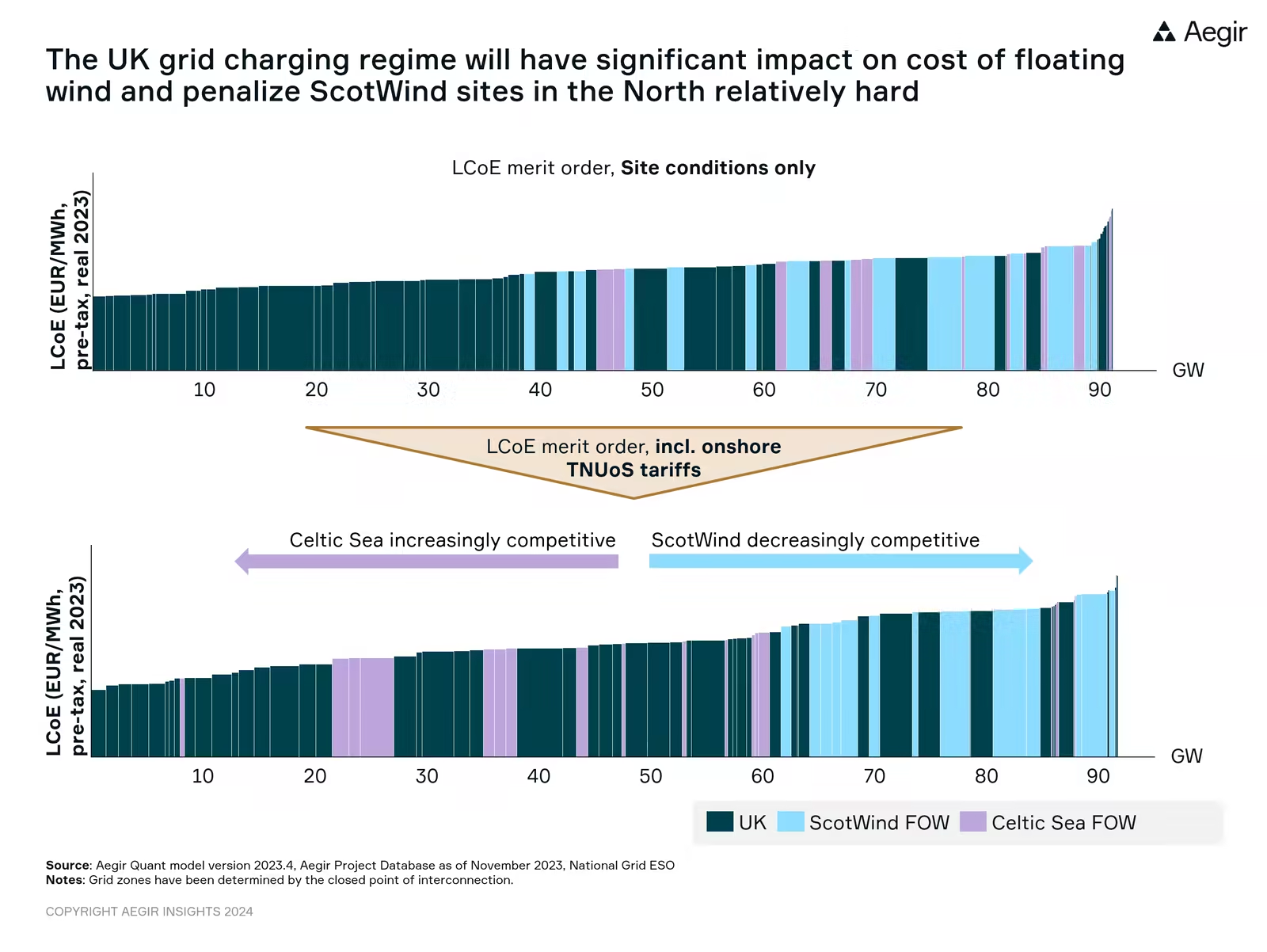
The UK was an early adopter of offshore wind, and has significant capacity potential in shallow floating wind. Much of this floating capacity comes from the ScotWind leasing round sites, which positioned Scotland as a floating frontrunner.
But are there hidden commercial challenges holding it back?
TNUoS tariffs in the UK, i.e., charges for distributing electricity through the onshore network, are more favorable in the South of the country where generation assets are in close proximity to demand centers. Consequently, ScotWind sites, being far from demand centers, would bear significantly higher grid charges if connecting to the national grid, having a significant negative business case impact for developers.
Using our tool Aegir Quant, we can model the impact of the TNUoS tariffs on a project’s relative attractiveness, providing insights on future UK floating wind projects:
- Given today’s distribution of onshore TNUoS tariffs, ScotWind sites would be penalized due to significant grid charges that move the projects out of price competition in comparison with the broader UK offshore wind market.
- This means that, despite having some of the most attractive site conditions, TNUoS tariffs may push ScotWind sites to end of the line for offshore wind economics.
- The large gap from low-high grid charges makes floating offshore wind especially in the Celtic Sea competitive with fixed-bottom projects further north.
What does this mean for the UK floating sector?
In order to unlock the large floating wind potential of Scotland, changes are needed to the grid charging regime or substantial investment in interconnectors to bring generation more directly to demand centers.
Otherwise, Scotland’s offshore wind pipeline could be delayed or even stranded.
Aegir Insights powerful commercial tool kit for offshore wind
Aegir’s Quant solution provides offshore wind developers and governments with the sector’s most powerful software for auction and competitor simulation.
Reach out to us to learn more about Aegir Insights' advanced commercial tool kit which helps major energy players make the best investment decisions in offshore wind.