Getting offshore wind auction designs right - Summary of the latest Aegir Wavelength
The importance of future offshore wind auction designs for the development and health of the sector: key insights from our latest Wavelength Roundtable discussion
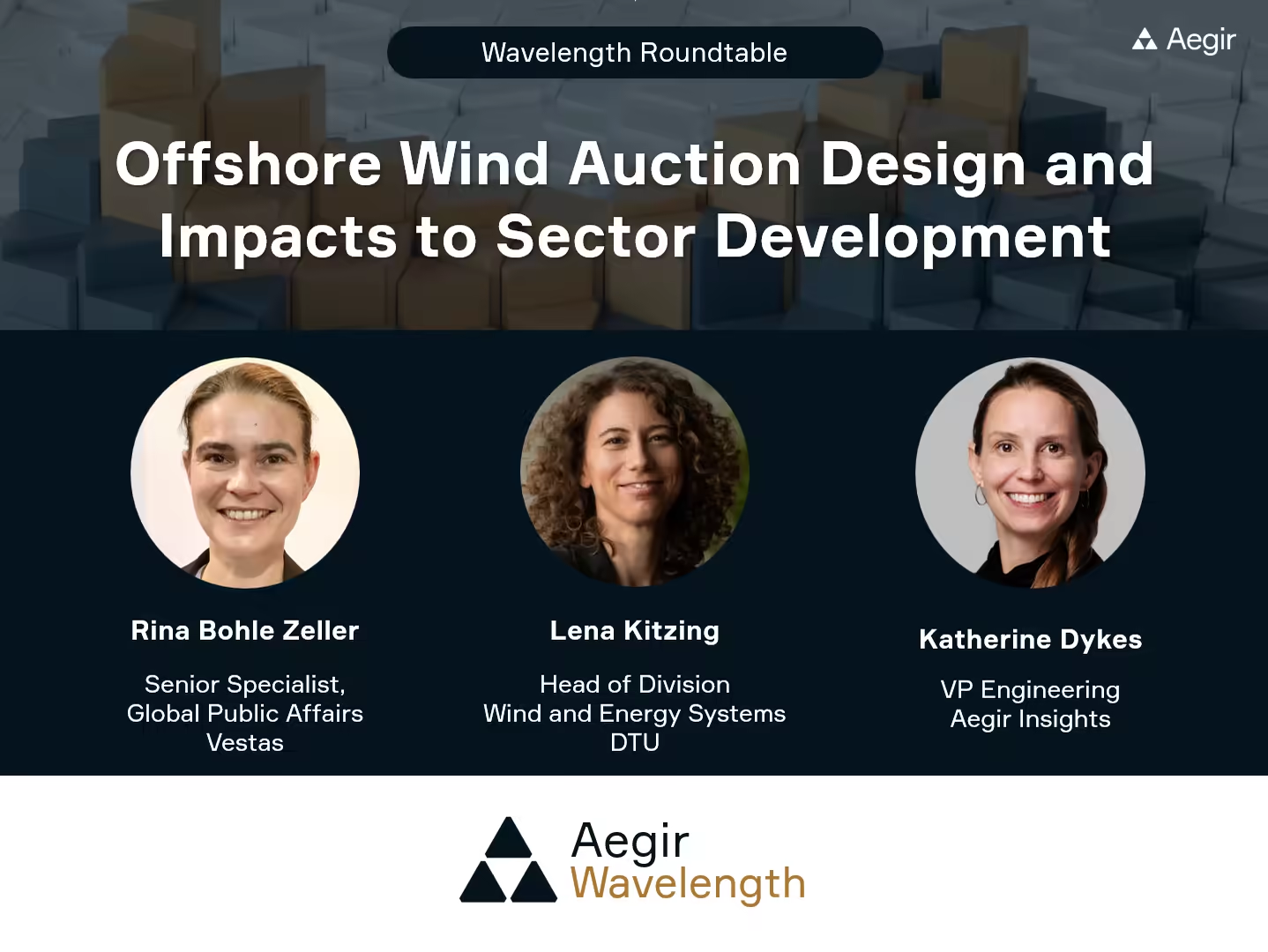
Our recent Wavelength Roundtable focused on future offshore wind auction designs and their implications for sector development. Katherine Dykes, VP of Engineering at Aegir Insights led the discussion, bringing together two industry experts: Lena Kitzing, Head of Division at DTU Wind and Energy Systems and member of the European Scientific Advisory Board on Climate Change, and Rina Bohle Zeller, Senior Specialist in Global Public Affairs at Vestas.
The Crucial Role of Auction Design
Auction design is of critical importance for shaping the future of the offshore wind sector. Approximately 90% of future offshore wind projects will be auction-based, marking a significant shift from the historically negotiated contracts. The design of future auctions needs to be right to ensure sustainable and effective sector development.
Poorly designed auctions could lead to project delays, cancellations, and re-negotiations. There is an increasing "say-do gap," where offshore wind targets are not met due to flawed auction designs. Ambitious targets need to be transformed into actionable, economically viable projects through well-crafted auction criteria.
Resilience Criteria and its Implications
Offshore wind auction increasingly include resilience criteria, particularly stemming from the European Council's Net Zero Industry Act. This development has its roots in broader geopolitical shifts, such as the Russian invasion of Ukraine and the U.S. Inflation Reduction Act, which have intensified the focus on energy security and supply chain resilience.
However, the criteria can potentially also increase complexity (sourcing from multiple locations, adding transportation costs) and decrease flexibility of sourcing (locking in decisions and risk earlier in project development). Careful implementation will be important to ensure these criteria do not have unintended consequences to project risk profiles and costs.
Non-Price Criteria: Opportunities and Challenges
Another trend in auction design is non-price criteria in auctions, such as sustainability, system integration, and innovation. Auctions include these criteria either as pre-qualification requirements or as part of the scoring mechanism within auctions, like e.g., in the Netherlands, Germany or Japan, where non-price criteria play a significant role in project evaluation.
One particular focus is on sustainability and a project’s carbon footprint criteria. While trying to decide on the project with the lowest carbon footprints is a good idea on paper, it can inadvertently lock manufacturers into specific sourcing decisions and technology choices long before project implementation, limiting innovation and flexibility. There needs to be a balanced approach that considers long-term objectives and market realities, to avoid unintended consequences.
Furthermore, there is currently a lack of standards around non-price criteria, and in some cases, even a lack of quantitative methods to evaluate such criteria. Clear guidance on criteria and assessment methods is needed.
Harmonization and Flexibility
Overall, there is a need for harmonization across different national markets while allowing for regional flexibility. Excessive national fragmentation could complicate the delivery of projects and increase costs in development. But there also needs to be room for guidelines and best practices. This ensures some level of consistency without limiting local market dynamics.
Final Takeaways
To conclude, policymakers need to make informed decisions on offshore wind auction designs. Understanding the market and engaging with diverse stakeholders are crucial for designing effective auctions. Policymakers should aim to balance national preferences with the broader needs of the global offshore wind industry to achieve sustainable and successful outcomes, to ultimately accelerate the build-out of renewable energy.
Meet the speakers:
- Rina Bohle Zeller is a Senior specialist, Global Public Affairs at Vestas. She is working at the crossroads of global policy issues and strategies to enable the acceleration of a sustainable global energy transition. Prior to joining Vestas in 2007, Mrs Bohle Zeller has held senior positions in audit and consultancy services at PricewaterhouseCoopers in Paris, France. She is titular of an MBA (Westfälische Wilhelms-Universität in Münster, Germany) and of a master’s degree in economics of international Relations (Sciences Po in Paris, France).
- Lena Kitzing is Head of Division for DTU Wind and Energy Systems, Associate Professor in Energy Economics and Policy, and a member of the European Scientific Advisory Board on Climate Change. Her research spans across the energy-economy-society nexus and especially concerns the effective governance of energy systems through policy instruments, with particular focus on deployment and financing of renewables and their integration into the energy system. Lena is a leading expert in the economics and policy for offshore wind energy with a number of highly published articles in the area.
- As VP Engineering, Katherine Dykes is responsible for the advancement of technical solutions for Aegir Insights' software and data products. Before that, she previously has been the Head of Section in Wind & Energy Systems and led the DTU-Total Energies Excellence Centre in Clean Energy, seeking to accelerate the green transition through research, innovation, and technology demonstration. Katherine has over 15 years of experience leading research and innovation programs in wind and renewable energy system design and optimization, technoeconomic analysis, and system integration.
Aegir Wavelength
Wavelength is Aegir's digital webcast series. Get key insights into development and talking points in the global offshore wind industry.