UK AR8 eligibility: Sizing the onshore bid field
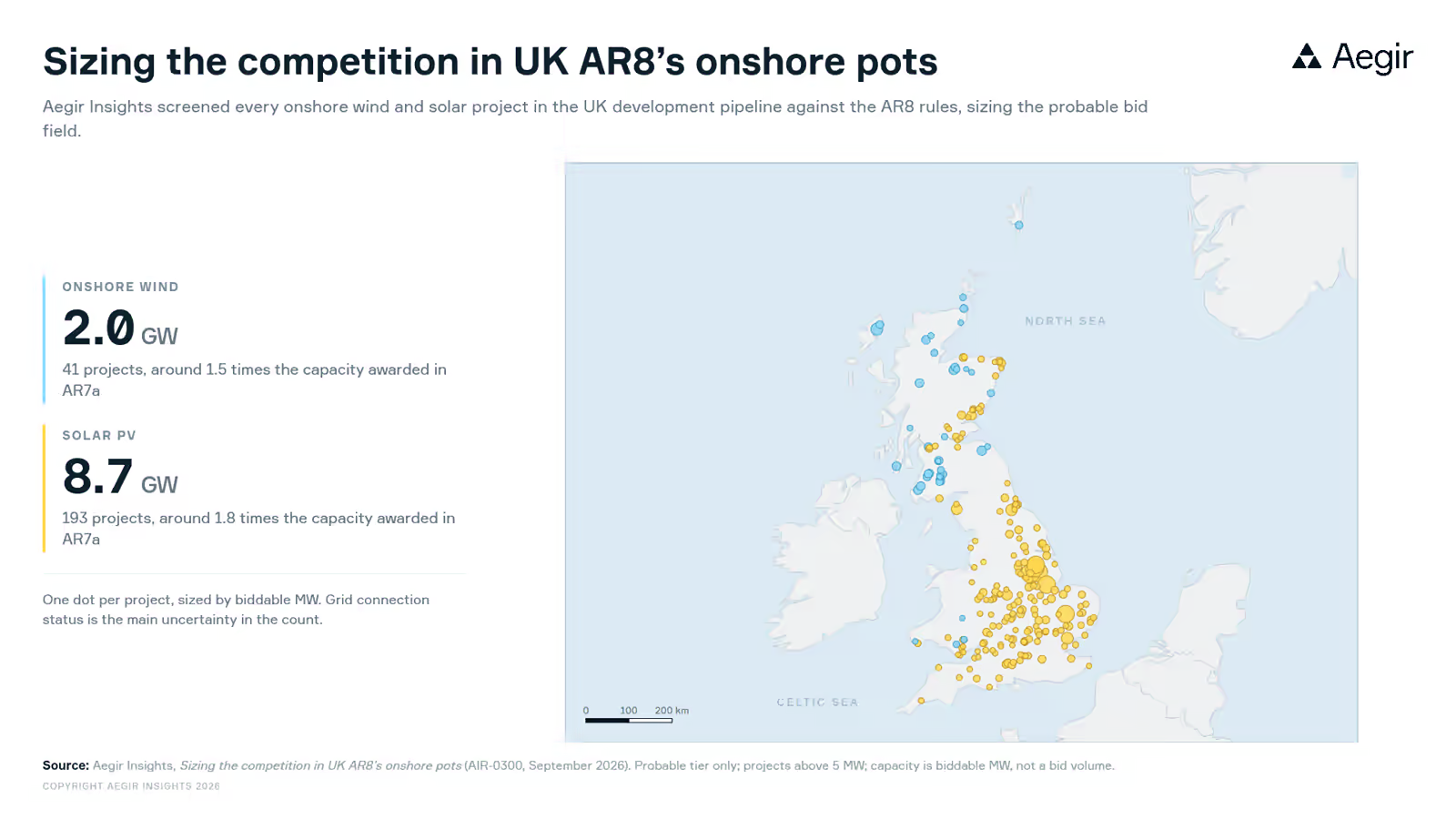
AR8 eligibility for onshore projects now depends on the reformed connection queue, which makes the probable bid field harder to count.
AR8 eligibility changed materially from AR7a, particularly around grid connections: Holding a connection agreement is no longer enough. Projects now need to meet the requirements of the reformed connection queue, including the applicable Gate 2 test, and the evidence for that is fragmented across NESO and distribution-network registers.
This makes the sizing of the potential competition in AR8 more complicated than in previous rounds.
In Aegir Insights' new report, we screened every onshore wind and solar project in the UK development pipeline against the AR8 rules, sizing the probable bid field:
🔹 Onshore wind: Around 2 GW across 41 projects could be eligible, 1.5 times the capacity awarded in AR7a.
🔹 Solar: An estimated 8.7 GW eligible across 193 solar projects, corresponding to 1.8 times the capacity awarded in AR7a.
🔹 Grid connection status is the main uncertainty in the count.
Clients can access the analysis on the Aegir Intelligence Platform, diving deeper into the AR8 rules, differences in charging zones for each technology, Gate 2 status across projects, as well as our screening methodology.
Want access? Sign up for a trial here: www.aegirinsights.com/trial-request
Or reach out to Scott Urquhart for a discussion.