Aegir Insights' global floating cost forecast expects floating wind development to progress in two stages towards 2035
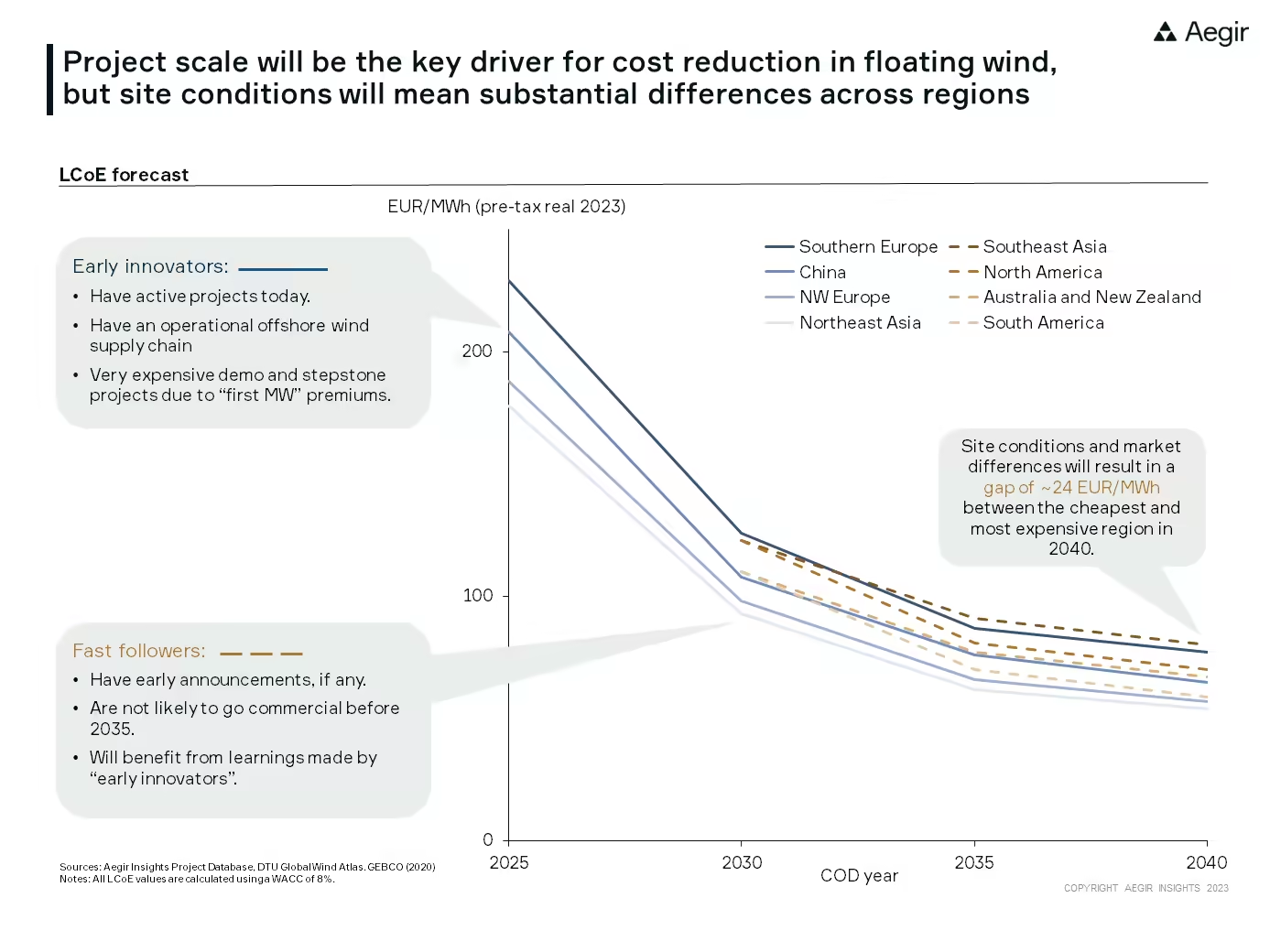
With close to 250 MW of operational capacity today and an outlook of at least 10 GW by 2035, floating wind will play an important role in the clean energy transition in several markets.
But ensuring that the infrastructure is ready and commercial implementation can progress requires a measured and strategic outlook on capacities and especially future cost developments. First movers may benefit in the long term, but they will pay a premium in the near term.
Development is likely to progress in two stages toward 2035:
- Early innovators will carry ‘first MW’ premium
In the near term, first mover markets will pay a significant premium due to immature technology and small-scale deployment. These early innovators are markets with a supply chain base and favorable site conditions, that are able to support the higher costs anticipated for early floating wind – e.g., China, Northeast Asia, Northwest and Southern Europe
- Fast followers will benefit from learnings
As cost falls, other markets will seize the opportunity to jump on the wagon early and are likely to have commercial floating wind activity around 2035. These fast followers are expected to leap directly to stepstone or commercial-scale projects rather than build demos. As they enter the market under more favorable conditions, benefitting from learnings of early innovator markets, they may be able to achieve a relatively quick cost-out.
As technology advances and the industry commercializes, we can expect LCoE to progressively decrease towards the end of the 2030’s. Beyond 2035, most regions will begin building floating wind projects and prices are projected to decline – although at different paces in different regions.
Aegir Insights' global floating cost forecast
Aegir Insights has recently published a Market Insights report to our subscribing clients, forecasting the cost of floating wind globally in the next decades and addressing regional site conditions based on data in Aegir’s project list of all announced offshore wind projects worldwide.
Market Insights reports are short, stand-alone intelligence pieces diving into significant events in the offshore wind market, giving you more context around and understanding of critical market developments.
Want to learn more? Please reach out to us here.
Should the floating wind industry re-evaluate its expectations?
Interested in more insights from Aegir Insights' global floating cost forecast? Read our previously published article on if the floating offshore wind industry should re-baseline its expectations on build-out and costs in the next decades.