Germany's draft WindSeeG reset: Support for offshore wind returns as a fallback, not a default
Germany is looking at bringing back support to offshore wind, but only after the market has said no to merchant terms. The draft WindSeeG amendment replaces uncapped negative bidding with a two-stage process backed by a two-sided contract for difference (CfD). However, the CfD is used as a fallback, not a default.
What does the draft WindSeeG amendment change?
Germany is looking at bringing back support to offshore wind, but only after there were no bids submitted in August of last year for the two pre-investigated sites N-10.1 and N-10.2 with a combined capacity of 2.5 GW, on merchant terms.
On 11 August, the German government opened an industry hearing on its draft amendment to the Offshore Wind Energy Act (WindSeeG), and the consultation closed this morning, 17 August 2026. The draft WindSeeG aims to replace uncapped negative bidding with a two-stage process backed by a two-sided contract for difference (CfD).
However, while support will be reintroduced, the suggested two-stage design makes the CfD a fallback, rather than a default.
The two-step process only offers the support as a fallback rather than as the default
The two-stage format tests merchant appetite first. The auction will first test bidders' willingness to secure sites without support. The CfD scheme is only then applicable if no merchant-based bids are received.
Auction volumes come down. The German government is targeting annual auctions of 2.0 to 4.8 GW from 2027 onwards. This points to a slower build-out than previously, where auction volumes were targeting 4 GW/year.
The German offshore wind targets did not change. Germany's offshore wind targets remain untouched at 30 GW by 2030, 40 GW by 2035, and 70 GW by 2045.
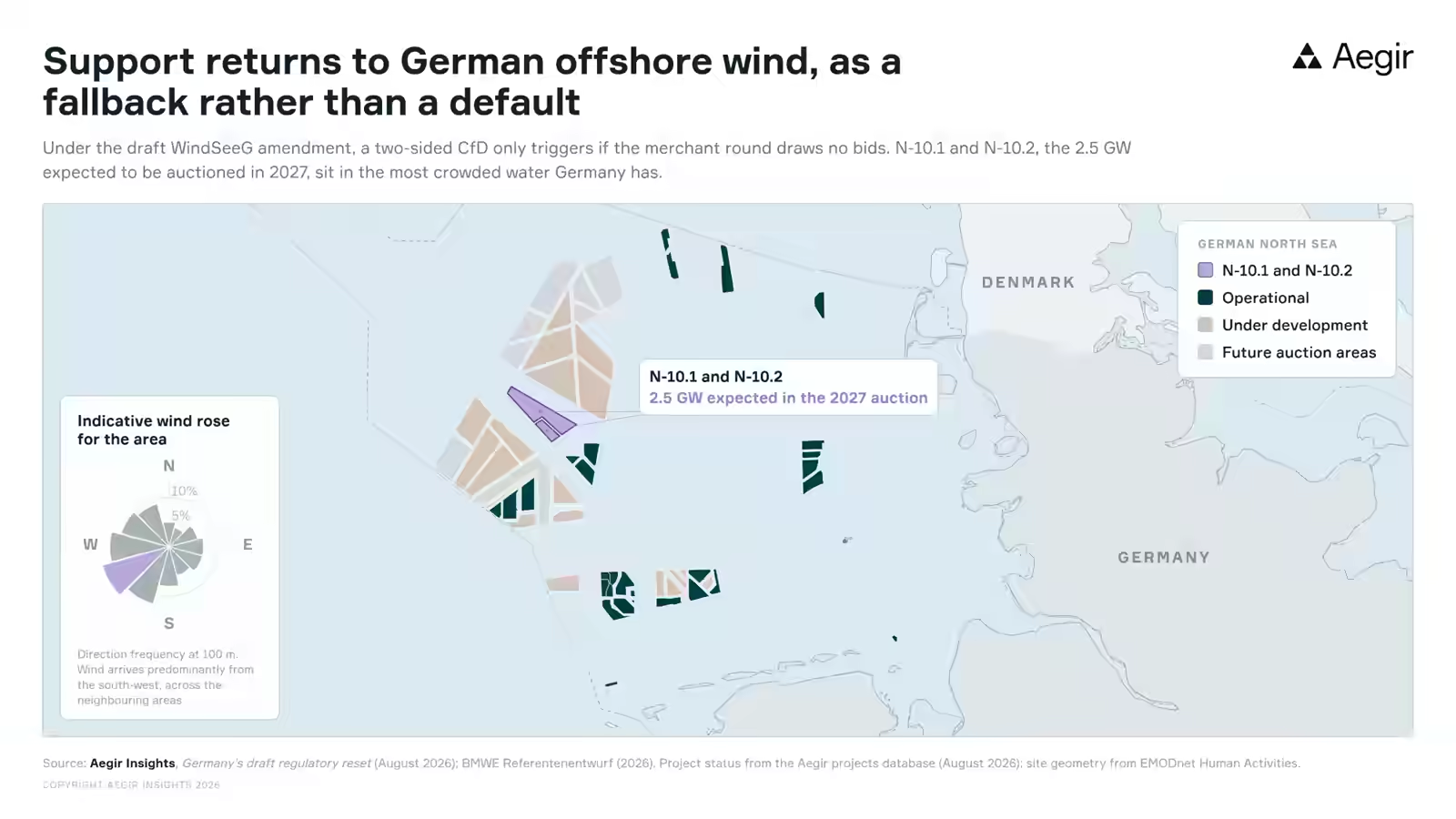
The expected 2027 auction sites are N-10.1 and N-10.2, together the 2.5 GW that Germany tried and failed to award in an auction last year that drew no bids. They sit in one of the most heavily developed parts of the German North Sea, surrounded by operational capacity, projects under development and further areas earmarked for future auctions.
One of the factors contributing to the limited interest in the sites N-10.1 and N-10.2 last year are potentially high external wake effects from neighboring projects. Wake losses from neighboring wind farms are becoming a central risk to offshore wind project economics, especially in dense areas like e.g., the German North Sea. External wake effects can lead to significant annual energy production losses on both new and existing awarded sites, impacting project business cases.
For more background on why Germany's offshore wind auction in August 2025 failed, see our earlier analysis of why the German 2.5 GW North Sea auction did not attract any bids.
What happens to the projects awarded in 2023 to 2025?
For the projects awarded in 2023 to 2025 on subsidy-free bids, the draft offers no clarity.
BWO, the Bundesverband Windenergie Offshore e.V. and other associations have argued for a one-off voluntary return option for affected projects, followed by re-tendering of returned sites under the new auction framework. That would give holders of challenged awards a way out and put the sites back into a market that now has a support mechanism behind it. However, the draft so far indicated no such plan.
Where to see the full analysis
In our new Insight (available to clients on the Aegir Platform), we run the expected 2027 auction sites, N-10.1 and N-10.2, through Aegir Quant™ to test whether the proposed ceiling price supports a bankable return, with and without indexation, and revisit where the 2023 to 2025 awards now stand.
Want the numbers behind it? Get in touch for a walk-through of the analysis and the Quant runs behind it.
Key questions on the draft WindSeeG
What is the WindSeeG amendment?
A draft amendment to Germany's Offshore Wind Energy Act, the Windenergie-auf-See-Gesetz. The German government opened an industry hearing on it on 11 August 2026. It replaces uncapped negative bidding with a two-stage auction process backed by a two-sided contract for difference.
Does the draft WindSeeG reintroduce subsidies for German offshore wind?
It reintroduces the instrument, but as a fallback. The auction first tests whether bidders will take sites without support. The CfD scheme only applies if no merchant-based bids are received, so support is not the default route to market.
How much offshore wind will Germany auction each year from 2027?
The German government is targeting annual auctions of 2.0 to 4.8 GW from 2027 onwards, a corridor rather than a fixed volume. This points to a slower build-out than previously, where auction volumes were targeting 4 GW/year.
Has Germany lowered its offshore wind targets?
No. The targets remain untouched at 30 GW by 2030, 40 GW by 2035, and 70 GW by 2045, even though the annual auction corridor points to a slower build-out.
What does the draft mean for projects awarded between 2023 and 2025?
It offers no clarity. BWO and other industry associations have argued for a one-off voluntary return option for affected projects, with returned sites re-tendered under the new framework, but the draft indicates no such plan.
Which sites are expected in Germany's 2027 offshore wind auction?
N-10.1 and N-10.2 in the German North Sea, the same 2.5 GW that failed to attract bids in the earlier round.