Pre-investigated sites, zero bids: Why Germany's 2.5 GW North Sea auction failed
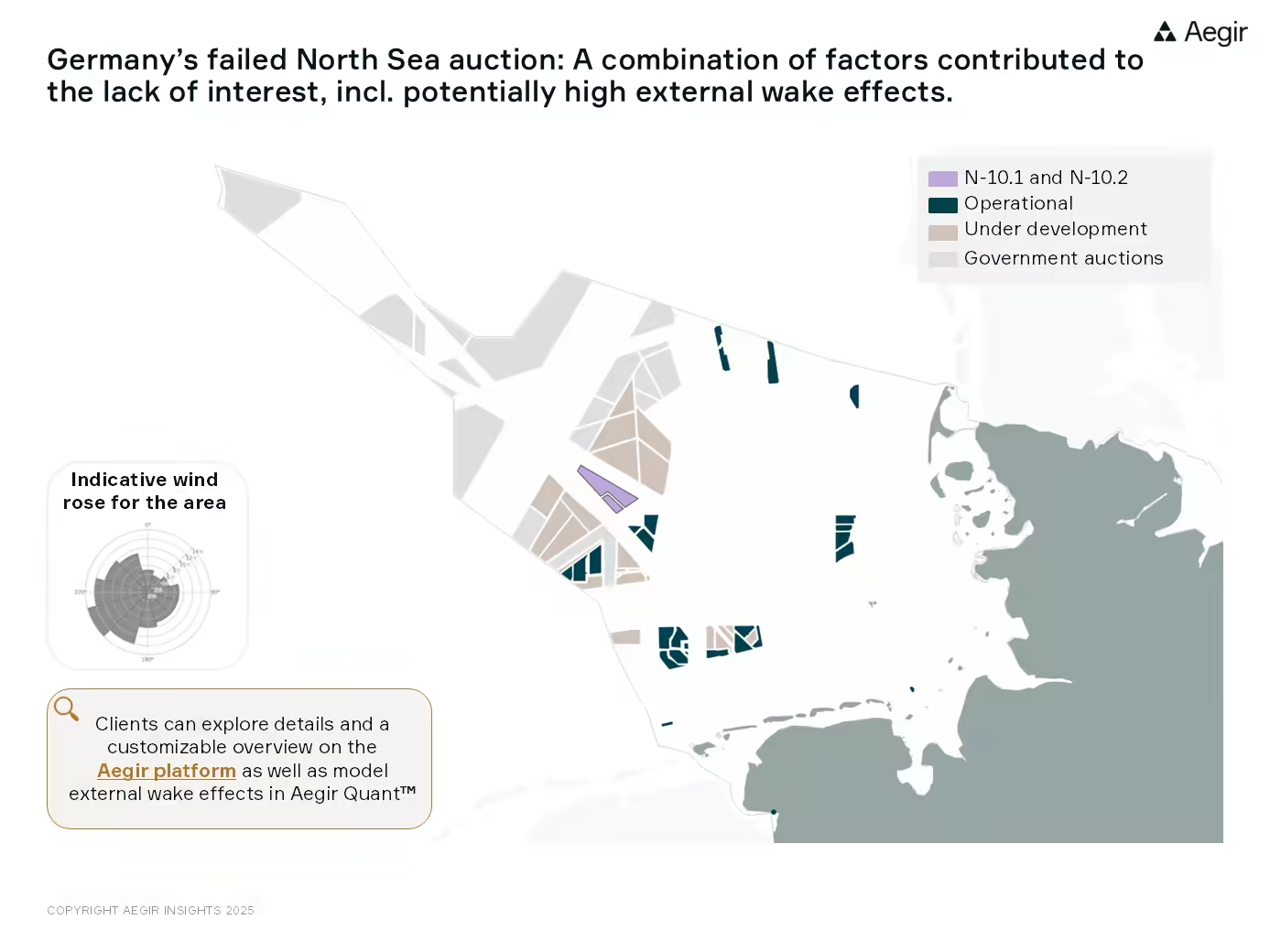
On 6 August 2025 it was announced that no bids were submitted in the German North Sea offshore wind auction for the two pre-investigated sites N-10.1 and N-10.2 with a combined capacity of 2.5 GW.
Germany awards offshore wind sites under two schemes. On pre-investigated sites, the authorities carry out the site surveys up front, covering wind, oceanographic and marine traffic conditions, and bidders compete largely on willingness to pay, with the financial bid carrying 60% of the evaluation points and no state support on offer. On non-pre-investigated sites, the developer runs its own surveys and a sliding market premium is available. N-10.1 and N-10.2 were pre-investigated sites, which means full merchant power price exposure and a five-year window from award to commissioning.
Given the low participation and historic low clearing price in the last German auction in June 2025 for the more attractive non-pre-investigated site N-9.4 (access to our analysis for clients here), the outcome of this auction did not come as a surprise for the industry.
While being a major blow for Germany's offshore wind ambitions, it also sends a clear signal to policymakers not only in Germany but more widely that offshore wind auction schemes based on pre-Covid economic conditions are no longer enough and there is a need to consider a re-introduction of support for a continuous buildout of offshore wind – at least in the short to midterm.
Update, August 2026: That reset has now arrived on paper. Germany's draft WindSeeG amendment reintroduces support through a two-sided CfD, but only as a fallback if a merchant round draws no bids, and N-10.1 and N-10.2 are the sites expected back in the 2027 auction. Read our analysis: Germany's draft WindSeeG reset: Support for offshore wind returns as a fallback, not a default.
Aegir Insights’ clients have access to a new report on the Aegir Platform, analyzing the factors contributing to this failed German North Sea auction more in-depth, incl. business case and external wake modelling in Aegir Quant™ for the N-10.1 and N-10.2 sites.
Want to discuss the auction outcome and how Germany can get back on track?
Reach out to us here for a meeting.
Rapid wake interference scenario modelling with Aegir Quant™
One of the factors contributing to the limited interest in the sites N-10.1 and N-10.2 are potentially high external wake effects from neighboring projects.
Wake losses from neighboring wind farms are becoming a central risk to offshore wind project economics, especially in dense areas like e.g., the German North Sea. External wake effects can lead to significant annual energy production losses on both new and existing awarded sites, impacting project business cases.
With the external wake modelling capabilities in Aegir Quant™, Aegir Insights made an analysis of the wake effect on future German sites.
Aegir Quant™’s novel feature allows for rapid assessment of many project and timing scenarios in seconds, saving time and focusing efforts before employing more resource-intensive modelling solutions which can take days or weeks.
Browse more features of Quant™ here.
Aegir Newsletter: Stay up-to-date with development in offshore wind and new analysis by Aegir Insights
Delivered straight to your inbox, Aegir Insights' intelligence newsletter will sharpen your market insight with exclusive analysis on key markets, developments, and technologies shaping offshore wind.