Offshore data centers: The five archetypes, and why the timelines deserve scrutiny
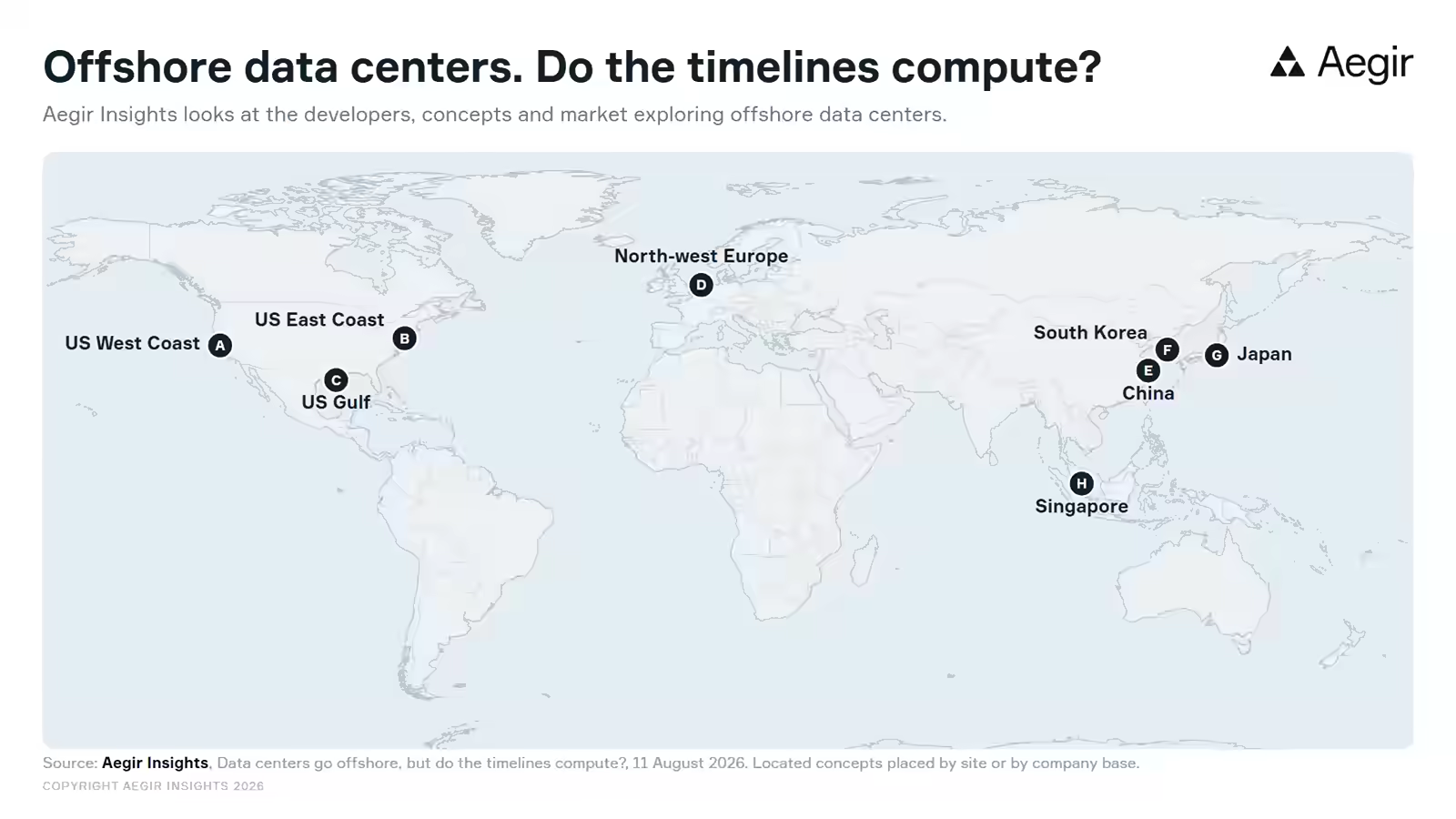
Offshore data centers are not a new idea. Leading up to 2026, over the course of two decades, multiple different concepts have been trialed. However, driven by the recent AI boom, the idea of moving data centers offshore is gaining a renewed drive. In just the last six months to August 2026, eleven new offshore data center concepts were announced, from venture-backed startups to major shipbuilders to utilities weighing sites around their existing offshore energy platforms, seeking speed and scale. But could going offshore really be the answer?
Aegir Insights reviewed every offshore, floating and subsea data center concept we could identify, announced, funded or built, and scored each one on where it stands. The onshore pipeline these concepts are reacting to sits in the Aegir data center database, next to the renewable projects that would have to power it.
Why data centers are looking offshore
AI has turned computing capacity into an infrastructure problem, and hyperscalers and governments alike are struggling to secure the power they need. Announced data center pipelines are growing across markets globally, and a modern facility now lands on the grid like a power plant, with comparable land, water and transmission demands. This is also where current issues that data centers are facing are coming from.
For the first part, onshore siting opposition is growing. The AI buildout has pushed facilities to a scale that draws organized resistance amongst stakeholders, and projects that once cleared planning quietly no longer do. That is happening on both sides of the Atlantic, with the United States furthest into the buildout and Europe beginning to follow. In the US, 63% of likely voters polled in July 2026 said they would oppose a data center in their own community.
Second, even where a data center can find viable siting, the grid often cannot feed it. Grid connection queues are getting longer and longer, taking years to sometimes decades.
These constraints have pushed developers to look for sites beyond the reach of local planning committees and connection queues, offshore or, for the most ambitious such as SpaceX, in orbit.
What are the five archetypes of offshore data center?
As mentioned, though not a new idea, the AI boom and onshore constraints have revived the idea of offshore data centers. Eleven offshore data center concepts were announced in just the last six months, by venture-backed startups to major shipbuilders and utilities weighing siting potential around existing offshore energy platforms.
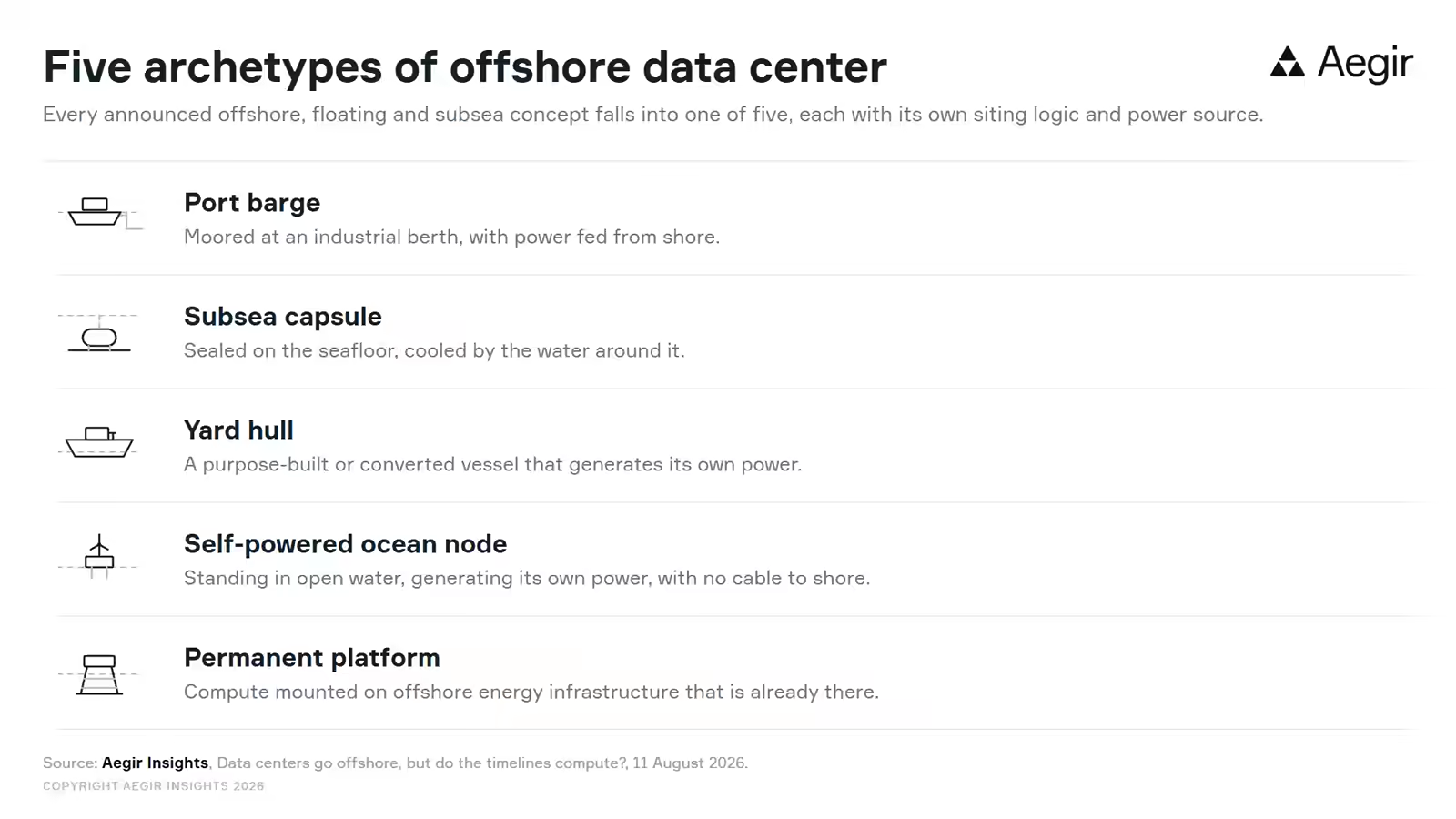
The announced concepts are not one idea. They fall into five distinct archetypes, each with a different siting logic, a different power source and a different consenting exposure.
Source: Aegir Insights, Data centers go offshore, but do the timelines compute?, 11 August 2026.
- Port barge. Moored at an industrial berth, with power fed from shore.
- Subsea capsule. Sealed on the seafloor, cooled by the water around it.
- Yard hull. A purpose-built or converted vessel that generates its own power.
- Self-powered ocean node. Standing in open water, generating its own power, with no cable to shore.
- Permanent platform. Compute mounted on offshore energy infrastructure that is already there.
No single type fits every use case, with different concepts being more fitting for different solutions or sites. A port barge suits a constrained metro grid, a capsule suits a sheltered seabed near demand, platform-mounted compute suits curtailed offshore wind.
Is going offshore actually faster? The permitting reality offshore
The thesis for moving data centers offshore rests on speed and scalability, in reaction to onshore connection queues and permitting timelines. But the record of major offshore energy projects points to development and construction timelines the same as or longer than the permitting and connection queues the concepts are built to avoid.
As a reference, GW-scale offshore wind typically runs a decade from first commitment to first power, as do interconnectors and offshore oil and gas infrastructure.
What does consenting an offshore data center actually require?
Offshore installations need a series of rights and permits:
- Seabed tenure
- Site studies
- Development consent
- Environmental assessment
- Marine works consent
- Discharge consent
- Navigation clearance
- Grid connection, where needed
Two things make this harder for data centers specifically.
No jurisdiction has a route designed for this. The offshore consenting framework was written for oil and gas and marine renewables, with consent regimes built around generating stations and leasing models built around extraction. An offshore data center is a large marine electricity load, which is neither of these two.
The environmental case covers new ground. A data center rejects heat into the sea continuously, so its assessment has to answer new questions compared to offshore wind and upstream oil and gas assessments.
Who is best positioned to build offshore data centers?
For existing holders of ports, grid connections and offshore energy infrastructure, this presents an opportunity. Seabed tenure, consented sites, berths and years of survey and stakeholder work give them a head start exploring whether data centers could be attached to assets that have been consented once already.
Whether offshore data centers stay a niche or become a segment depends on how the onshore constraints develop. Sustained opposition and lengthening connection queues would strengthen the case for going to sea.
Which concepts exist, and which have only been announced
Every offshore, floating and subsea data center concept we could identify is in the full concept review, named and grouped by archetype, each carrying its developer, its power source, its consenting status, and where it stands today, from operating through under construction and announced to abandoned.
The concepts, and the projects that would power them, in one platform.
The full offshore data center set sits next to the global data center and renewable project databases that show where the demand and the supply actually are.
Key questions on offshore data centers
What is an offshore data center?
A data center sited at sea rather than on land, to avoid onshore siting constraints and grid connection queues. Aegir Insights groups the announced concepts into five archetypes: Port barges, subsea capsules, yard hulls, self-powered ocean nodes and compute mounted on permanent offshore platforms.
Can data centers be built offshore?
Yes. Concepts have been trialed for two decades, and the current set ranges from operating installations through under construction and announced to abandoned. Eleven new concepts were announced in the six months to August 2026 alone. The open question is not whether it can be done but how fast: The offshore consenting record points to timelines at least as long as the onshore queues these concepts are designed to avoid.
Are offshore data centers a new idea?
No. The concept is older than the AI boom and has surfaced before without reaching commercial scale in most markets. What is new is the funding and the pace of announcements, with eleven concepts announced in the six months to August 2026.
Why are data centers looking offshore?
Because onshore siting and grid connection are both getting harder. Local opposition to large data centers is rising on both sides of the Atlantic, and even where a site clears planning, the grid often cannot feed it, with connection dates quoted in years. Offshore sits outside both constraints.
How many offshore data center concepts have been announced?
Eleven offshore data center concepts were announced in the six months to August 2026, ranging from venture-backed startups to major shipbuilders and energy utilities. The full set, including the earlier generation of concepts, is tracked on the Aegir Platform.
Are offshore data centers faster to build than onshore ones?
That is the claim, and it is the part worth testing. The record of delivered offshore energy infrastructure points to development and construction timelines at least as long as the onshore permitting and connection queues the concepts are designed to avoid.
What is the difference between a floating data center and a subsea data center?
A floating data center sits on the surface, either moored at a berth as a port barge or as a vessel that generates its own power. A subsea data center, also called an underwater data center, is a sealed capsule placed on the seafloor and cooled by the water around it. They face different consenting exposure: The first is assessed on its anchor spread and cables, the second on its seabed footprint.
Who has the advantage in offshore data centers?
Existing holders of ports, grid connections and offshore energy infrastructure. Seabed tenure, consented sites and berths are what the concepts need and what entrants lack.